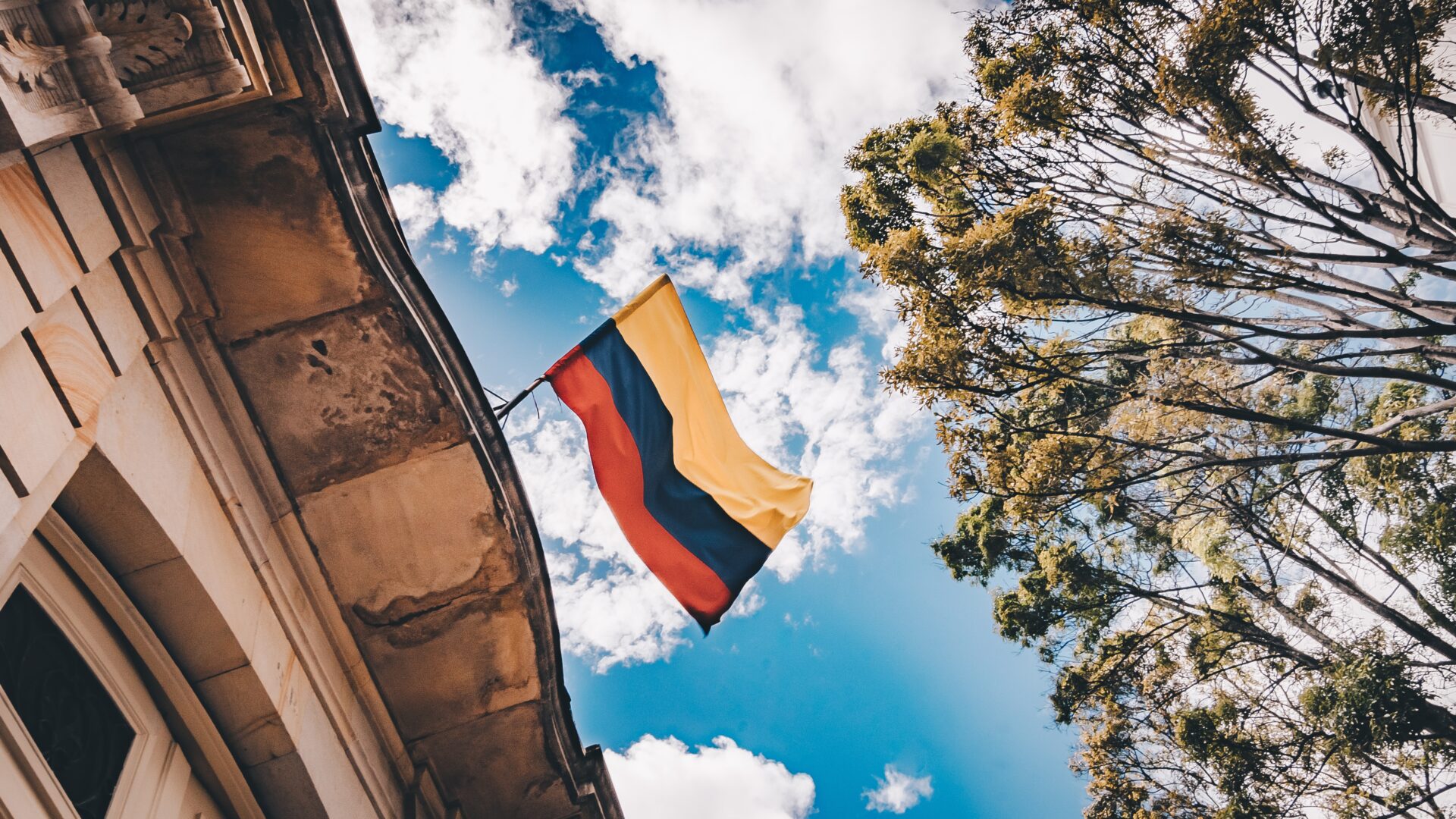
Since the late 1990s, Global Exchange has built relationships of solidarity with the Colombian people. That commitment took shape through accompaniment during the bloodiest years of the internal armed conflict, and deepened through our support for electoral reform and the historic 2016 Peace Accord. Those decades built the relationships of trust that sustain our work today.
Global Exchange has always worked to advance people-to-people diplomacy and to build honest alliances that help us understand, question, and challenge policies of manipulation and violence, including those the United States has carried out in Colombia.
A Critical Juncture
Since Abelardo de la Espriella took office as president in August 2026, a sense of crisis has returned to the country, despite the historic steps toward peace and justice Colombia has taken in recent decades.
De la Espriella, a key ally backed by Donald Trump, has supported Washington’s hardline approach to the drug war—backing U.S. military strikes on alleged trafficking vessels and advocating for expanded extraditions. Many Colombians fear his divisive rhetoric and demonization of political opponents will deepen internal divisions and reawaken old, violent conflicts.
In response, Global Exchange will produce regular reports on developments in Colombia, along with concrete ways people in the United States can stay informed and take action at key moments. Developments in the U.S. pro-democracy movement are being closely watched in Colombia, as political shifts in Washington tend to echo across the wider region.
What We Cover
Policy & Security
Analysis of U.S. security assistance, military funding allocations, and Colombia’s role within hemispheric initiatives like the “Shield of the Americas.”
Human Rights
Monitoring conditions for social leaders and human rights defenders, alongside key developments in peace agreement commitments.
Regional Impact
Examining how political shifts in Washington influence democratic institutions and security policies in Colombia and the broader region.


Washington ↔ Bogotá
What Washington and Bogotá are doing that shapes Colombia’s democracy, human rights and peace process, with every source linked.
| Oct 6, 2026 | Washington | Security | The New York Times · EN · | U.S. Sends ‘Hunter-Killer’ Drones to South America to Target Cartels | The New York Times reports, citing U.S. officials, that the U.S. military has moved MQ-9 Reaper drones from Africa to Colombia and Ecuador as part of an expanded campaign against drug cartels. Both countries have agreed to carry out joint operations with the United States on their territory. |
| Sep 27, 2026 | Bogotá | Human Rights | Infobae · ES | Más de 110 líderes sociales han sido asesinados durante 2026 en Colombia, según alertó la Defensoría del Pueblo | The Ombudsman’s Office reported 112 social leaders and human rights defenders killed from January to August 2026, plus 10 peace accord signatories. Cauca had the most cases (26), and August was the deadliest month, with 22 killings. |
| Sep 24, 2026 | Bogotá | Foreign Policy | Infobae · ES | El vicepresidente José Manuel Restrepo leyó discurso de Abelardo de la Espriella en Naciones Unidas con críticas al globalismo y a la misma ONU: “No busco complacer a nadie” | Vice President José Manuel Restrepo read President De la Espriella’s address to the UN General Assembly, since the president has pledged not to travel abroad. The speech criticized UN bureaucracy and “globalism,” called armed groups “terrorist groups” and asked for international cooperation against drug trafficking. |
| Sep 16, 2026 | Washington | Bilateral | The White House · EN | President Trump Designates the 2027 “Major’s List” | The White House listed Colombia among four countries that have “failed demonstrably” in the past 12 months to meet their counternarcotics obligations, keeping the decertification in place despite the change of government in Bogotá. |
| Sep 9, 2026 | Bogotá | Peace Implementation | El País (Colombia) · ES | Presidente Abelardo de la Espriella pone fin a designación de negociadores con el ELN y el Clan del Golfo | The government revoked its negotiators in talks with the ELN, the Clan del Golfo and several other armed groups, and ordered the temporary location zone in Putumayo closed by September 30, formally ending the previous government’s “total peace” talks. |
| Sep 8, 2026 | Washington | Bilateral | Cambio · ES | ¿Qué son los Acuerdos de Barranquilla? Estos son los detalles del encuentro entre De la Espriella y Marco Rubio | During Secretary of State Marco Rubio’s visit to Barranquilla, the two governments signed memoranda on critical minerals and civil nuclear cooperation. The agenda also covered earthquake reconstruction, security cooperation and the Shield of the Americas. |
| Aug 28, 2026 | Bogotá | Bilateral | AP · EN | Colombia captures a suspected Tren de Aragua gang leader as US security ties deepen | U.S. Southern Command says Colombian forces captured a suspected senior leader of Tren de Aragua, whom police accuse of leading the gang’s expansion in Peru. AP frames it as a sign of deepening U.S.-Colombia security ties. |
| Aug 27, 2026 | Bogotá | Bilateral | El Espectador · ES · Subscribers | De la Espriella busca mostrar resultados tangibles para reestructurar relación con EE. UU. | President De la Espriella signed five extraditions of criminal leaders the day a senior U.S. military commander was in Colombia to map out a joint security strategy. His government is also opening the door to operations with U.S. support and seeking lower tariffs and certification in the fight against drugs. |
| Aug 21, 2026 | Bogotá | Peace Implementation | El País (Colombia) · ES | Firmantes del Acuerdo de Paz solicitan al presidente De la Espriella que defina futuro de la JEP | Peace accord signatories filed a formal petition asking President De la Espriella what his government will do with the Implementation Unit, the JEP and reincorporation programs. |
| Aug 17, 2026 | Bogotá | Earthquake | Reuters · EN | Colombia’s president pegs early quake losses at $9.6 billion | President De la Espriella said preliminary economic losses from the August 10 earthquake could reach 30 trillion pesos, about $9.6 billion, mostly in buildings. He said the figure is likely to change. |
| Aug 7, 2026 | Washington | Bilateral | U.S. State Department · EN | A New Era in U.S.-Colombia Relations | Says the United States intends to announce $1 billion in security assistance for the new government and welcomes Colombia into the “Shield of the Americas.” |
| Aug 6, 2026 | Bogotá | Democracy & Sovereignty | El Espectador · ES | Defensoría respalda a Hernán Penagos y rechaza amenazas contra la Registraduría Nacional | The Ombudsman’s Office backed National Registrar Hernán Penagos and rejected anonymous online threats and messages accusing the electoral organization of fraud outside formal complaint channels. It asked prosecutors to investigate. |
Special Reports
The latest analysis from Global Exchange on Colombia, U.S. policy, and democracy in the region.
-
Rubio Landed in Barranquilla, and Colombia’s New Playbook Came Into Focus
U.S. Secretary of State Marco Rubio’s visit to Barranquilla showed how quickly Colombia’s new government has aligned itself with Washington, from the Barranquilla Accords to the Shield of the Americas.
-
The Earthquake Is Over. The Reckoning Is Just Beginning.
A magnitude 7.4 earthquake struck western Colombia on August 10, hitting the Pacific coast hardest. An account of the damage, the communities left most exposed, and why solidarity from abroad matters now.
-
Colombia’s Election Is Over. The Harder Part Starts Now.
Iván Cepeda has acknowledged Abelardo de la Espriella’s victory. What the incoming government inherits, and the first signs of how closely Bogotá’s foreign policy may mirror Washington’s.
Webinars
Conversations Global Exchange has hosted or co-hosted on Colombia and the region.
-
When Empire Attacks — A Hemispheric Response
Organizers and advocates from across the Americas on U.S. economic coercion, political interference, and militarization in the region.
-
Elections in Colombia: Challenges for a democracy.
Following the March 8 legislative elections, a fragmented Congress, shifting alliances, and growing polarization have created an uncertain path toward governance.
-
What’s at Stake in Trump’s Oil War in Venezuela?Voices from Latin America’s Resistance
Voices from the region unpack U.S. military escalation and economic warfare in Venezuela, and what it means for Latin America.